
A detailed investigation published by The Wire has brought renewed attention to concerns surrounding the Special Intensive Revision (SIR) of electoral rolls in West Bengal. The report documents alleged large-scale discrepancies in voter lists across three constituencies, where several residents claim they were removed from the rolls despite possessing valid identity documents and voting in previous elections.
The SIR exercise, conducted periodically to update electoral rolls by removing duplicate, shifted, or deceased voters and adding new eligible voters, has now become the centre of political controversy in the state. According to The Wire’s ground report, multiple families across the surveyed constituencies said they discovered their names missing only after local political workers or booth-level inquiries informed them about the deletions.
Families Claim Sudden Deletion From Electoral Rolls
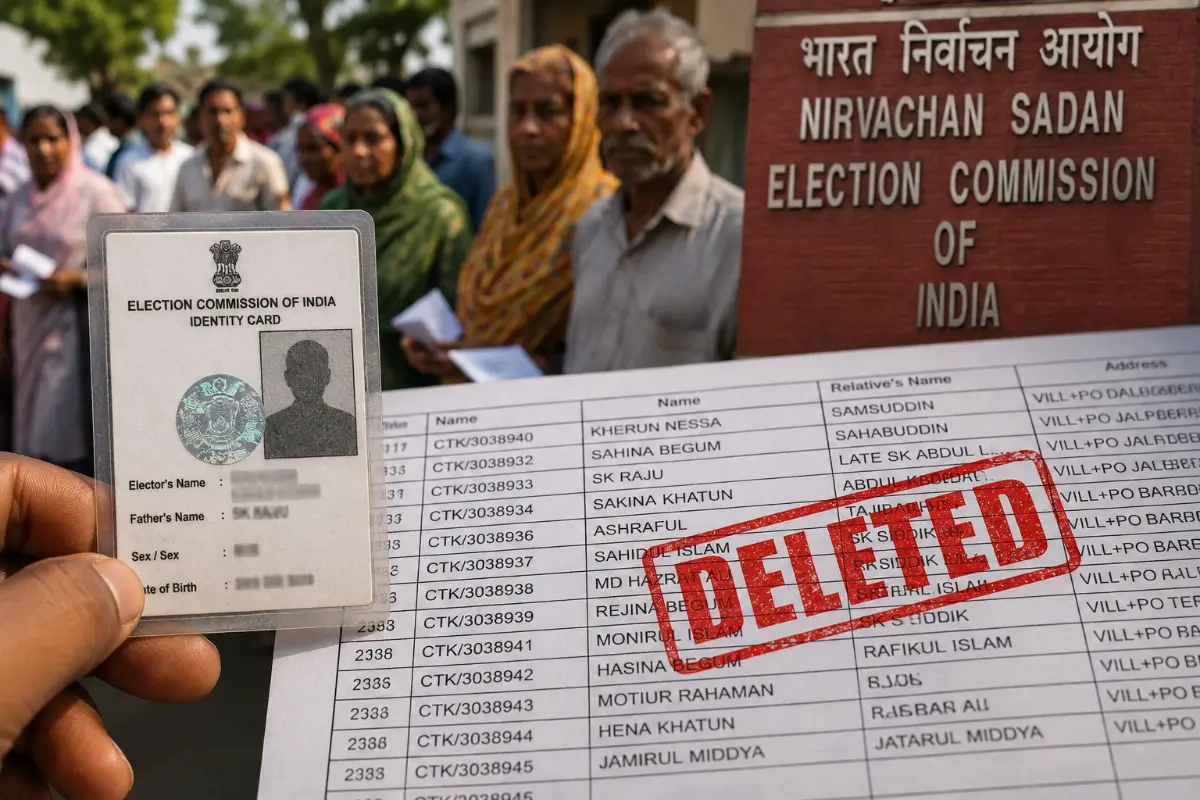
The report highlights testimonies from residents who alleged that entire households were either partially or completely removed from the voter list without prior notice. In several cases, family members living at the same address reportedly found inconsistent entries — while one person’s name remained intact, others from the same household had allegedly been deleted.
Residents interviewed by The Wire claimed they had been voting regularly for years and possessed official documents such as Aadhaar cards, ration cards, and voter identity cards. Some individuals reportedly said they were shocked to learn that their names were marked as “shifted” or “unverified” despite never moving from their residence.
The report further notes that many affected residents belong to economically weaker communities, daily wage earners, and elderly populations who may not frequently check updated electoral rolls online. Several locals reportedly expressed fear that they could lose their voting rights unless corrective action is taken before the next electoral cycle.
Concerns Over Verification Process
According to the investigation, questions have also been raised about how the verification process was conducted during the SIR exercise. Residents quoted in the report alleged that booth-level verification either did not happen properly or was completed without direct interaction with voters.
Some individuals claimed that no election officials visited their homes, while others alleged that forms were marked without proper confirmation. The report suggests that confusion surrounding documentation requirements and verification timelines may have contributed to the growing anxiety among voters.
Civil society members and activists quoted in the story argued that the removal of genuine voters, even if accidental, could undermine public trust in the electoral system. They stressed that electoral roll revisions must remain transparent, accountable, and accessible to ordinary citizens.
Political Reactions Intensify
The issue has triggered strong political reactions in West Bengal. Opposition parties reportedly accused authorities of selectively targeting certain voter groups under the guise of revision exercises. Political leaders cited the alleged deletions as evidence of administrative irregularities and demanded a thorough review of the process.
Meanwhile, election officials maintained that the SIR process follows standard Election Commission procedures aimed at ensuring clean and updated electoral rolls. Authorities reportedly clarified that citizens whose names are missing can submit claims and objections through designated mechanisms to restore their entries after verification.
Officials also emphasised that draft electoral rolls are published precisely to allow corrections before final publication.
Larger Questions Around Electoral Integrity
The controversy has once again brought national attention to the importance of maintaining accurate voter rolls while ensuring that legitimate voters are not excluded due to procedural lapses. Electoral experts have long argued that large-scale revision exercises require extensive ground verification, public awareness campaigns, and accessible grievance mechanisms to avoid disenfranchisement.
The allegations documented in The Wire’s report have intensified discussions around electoral transparency, especially in politically sensitive states where even minor irregularities can become major flashpoints.
As political parties prepare for future elections, the debate over voter list revisions is expected to remain a key issue in West Bengal.
For readers interested in the complete ground investigation, the original report can be accessed on The Wire