

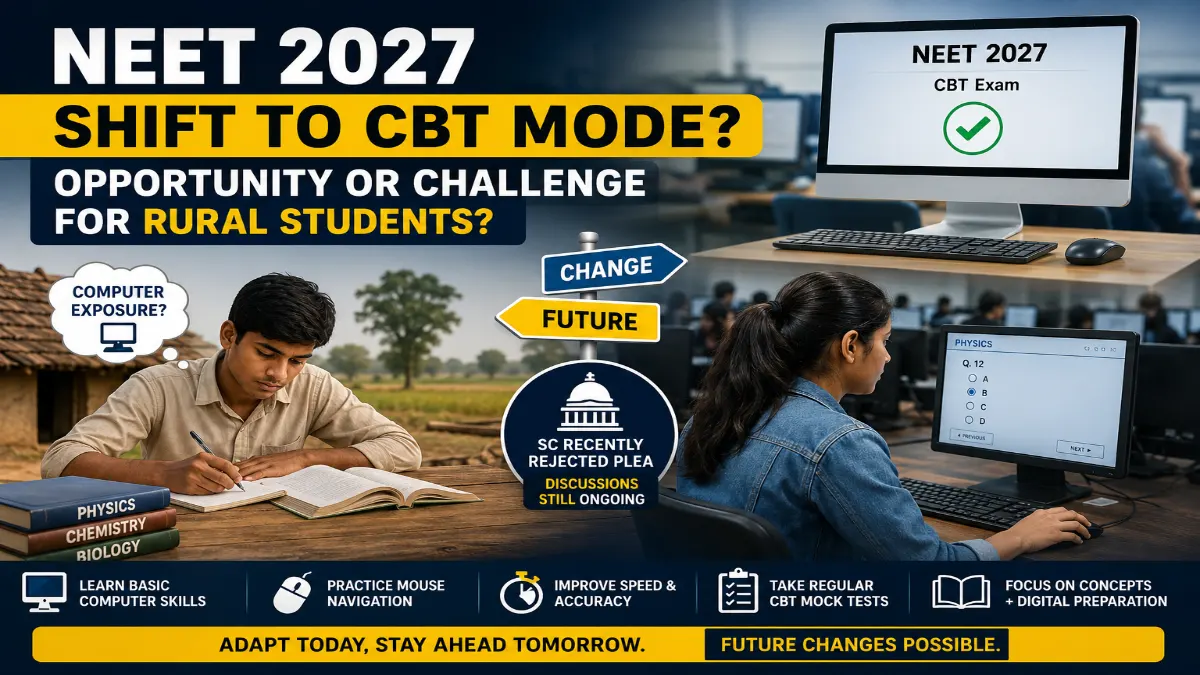
A growing discussion among medical aspirants suggests that NEET UG 2027 could be conducted in Computer-Based Test (CBT) mode, marking a major change from the traditional pen-and-paper examination. While no official notification has yet confirmed the transition, the possibility of a digital exam format has sparked debate among students, parents, and education experts.
The proposed change is expected to modernize the examination process, improve security, and reduce logistical challenges. However, concerns are being raised about whether students from rural and underprivileged backgrounds will be able to adapt to the new system.
What is CBT Mode?
A Computer-Based Test (CBT) is conducted on a computer at designated exam centres. Instead of marking answers on an OMR sheet, candidates select their responses directly on the computer screen.
Students would be required to:
- Navigate questions using a mouse and keyboard.
- Read and answer questions on a digital screen.
- Manage time through on-screen tools.
- Submit responses electronically.
Why Are Rural Students Concerned?
Many students from rural areas still have limited access to computers and digital learning resources. Unlike urban students who frequently use computers for online classes, mock tests, and educational platforms, some rural aspirants may be unfamiliar with basic computer operations.
Key concerns include:
1. Lack of Computer Exposure
Students who have primarily studied using books and handwritten notes may struggle with:
- Using a mouse efficiently.
- Navigating between questions.
- Reviewing marked answers.
- Managing screen-based examinations.
2. Digital Divide
Access to reliable computers and internet facilities remains uneven across India. Aspirants from remote areas may need additional support and practice opportunities to compete on equal footing.
3. Screen Reading Challenges
Reading lengthy Physics, Chemistry, and Biology questions on a screen can initially feel different from reading printed papers. Students may require practice to improve speed and concentration.
What Skills Will Become Important?
If NEET shifts to CBT mode, students may need to focus on:
- Basic computer literacy.
- Mouse handling speed and accuracy.
- On-screen reading skills.
- Time management in digital exams.
- Regular CBT mock test practice.
Experts believe that computer skills will not replace academic preparation, but familiarity with the digital interface could improve performance and reduce exam-day anxiety.
Benefits of CBT Mode
Despite concerns, CBT examinations offer several advantages:
- Faster examination process.
- Reduced chances of paper leaks.
- Better question management.
- Instant response recording.
- Environment-friendly and paperless testing.
Many national-level examinations, including engineering and management entrance tests, are already conducted in CBT mode.
What Should NEET Aspirants Do Now?
Even though the proposed change is still under discussion, students preparing for NEET 2027 can start building digital confidence by:
- Taking online mock tests regularly.
- Practicing with a computer instead of only mobile devices.
- Learning basic navigation tools.
- Developing speed and accuracy in screen-based exams.
Education counsellors suggest that early preparation can help students adapt smoothly if CBT mode is officially implemented.
Expert View
According to admission counselling experts, the transition to CBT mode would require students to go beyond traditional book-based preparation. Academic knowledge will remain the most important factor, but digital familiarity could become an additional advantage.
For rural students, this means that, alongside mastering NCERT concepts, spending time on computer practice may become equally important to remain competitive.
Discussions on this issue are ongoing. Although the Supreme Court has recently rejected the plea, there is still a possibility of changes being implemented in the future.
Conclusion
The possibility of NEET 2027 moving to a Computer-Based Test format could bring a significant transformation in medical entrance examinations. While the change may improve transparency and efficiency, it also highlights the need to bridge the digital divide so that students from all backgrounds get an equal opportunity to succeed.
Until an official announcement is made, aspirants are advised to stay updated and gradually incorporate computer-based practice into their preparation strategy.



No