

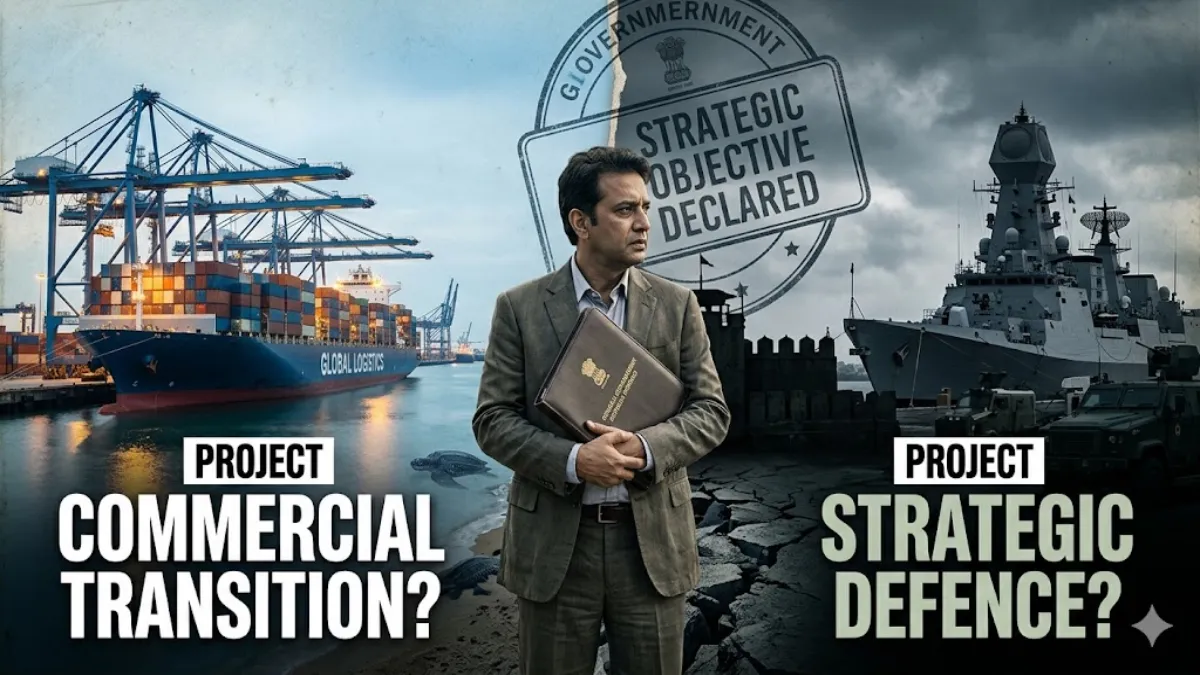
A recent report has sparked a major national debate regarding India’s massive ₹81,000-crore Great Nicobar Island Development Project.
Internal government documents reveal that the mega-project, originally promoted as a commercial shipping venture, was quietly given a “strategic” (national security) label after finance officials raised questions about its financial viability.
Here is a breakdown of what the controversy is about, to help you understand the core issues for your exams and current affairs.
The Core Component: Galathea Bay Port
The heart of this project is a massive International Container Transhipment Port (ICTP) at Galathea Bay, located on the southernmost tip of India’s territory.
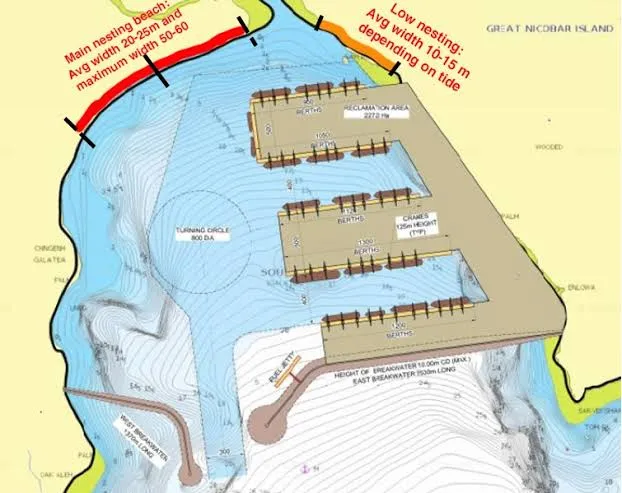
As you can see in the plan, the port is designed to sit right next to vital marine habitats, including major nesting beaches for endangered Leatherback turtles. The core idea behind building it here is to catch global cargo ships traveling the busy East-West international shipping lane, which passes just 40 nautical miles away.
The Shifting Labels: Commercial vs. Strategic
Here is a timeline where the project’s official reasoning changed after it faced internal financial scrutiny:
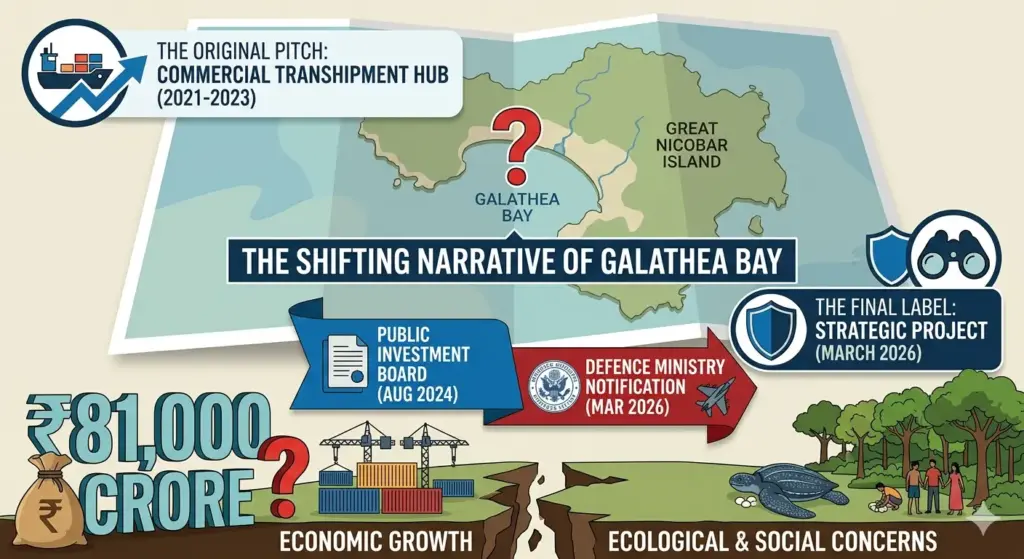
The Original Pitch (2021-2023)
2021-2023
The Ministry of Shipping pitches the port purely as a commercial transhipment hub. The goal is to compete with foreign ports like Singapore and Colombo, saving India an estimated $200 million annually in forex (foreign exchange) outflux.
The Finance Ministry Flags a Lack of Strategy
August 2024
The Public Investment Board (PIB), the Finance Ministry body that reviews expensive government projects, notes that the proposal lacks a clear “strategic objective” and advises the shipping ministry to find or add one.
The Subsidy Question
Early 2026
The shipping ministry requests ₹12,300 crore in government financial support (called Viability Gap Funding). Another Finance Ministry branch, the PPPAC, questions why a supposedly profitable “commercial” project needs such a massive public subsidy.
The Defence Label is Applied
March 2026
The Ministry of Defence formally notifies the project as a “strategic project”. This shifts its primary purpose from a simple commercial dock to a vital asset for national security and defence.
Why Does This Label Change Matter?
Critics, environmentalists, and opposition lawmakers point out two major consequences of this sudden shift:
- The Secrecy Umbrella: Under Indian law, if a infrastructure project is classified as “strategic” or vital to national security, the government can legally withhold documents from the public. This label has been used to reject Right to Information (RTI) requests and withhold comprehensive environmental and tribal impact reports.
- “Retrofitting” the Narrative: Critics argue that the national security angle was an afterthought, used to save a project that financial experts felt wasn’t commercially viable on its own merits, and to bypass growing ecological pushback.
The Great Balancing Act: Security vs. Ecology
This story is a textbook example of a classic development dilemma: National Ambition vs. Ecological and Social Justice.
- The Arguments For the Project: Proponents argue that India must develop the island to counter geopolitical challenges in the Indian Ocean (such as monitoring foreign naval movements near the Strait of Malacca). They also emphasize that it creates jobs and establishes an economic gateway to Southeast Asia.
- The Arguments Against the Project: Environmentalists warn that the project requires cutting down nearly 9 lakh trees in a pristine tropical rainforest and threatens the fragile nesting grounds of the Giant Leatherback turtle.
- Furthermore, local tribal councils representing the indigenous Shompen and Nicobarese communities (classified as Particularly Vulnerable Tribal Groups) have raised serious concerns about losing their ancestral, protected lands.
Whether the project is viewed as a necessary step for national security or a threat to environmental accountability remains one of the most critical policy debates in recent times.
Read Also: Over 2 Lakh People Sign Petition to Stop Great Nicobar Island Projects