

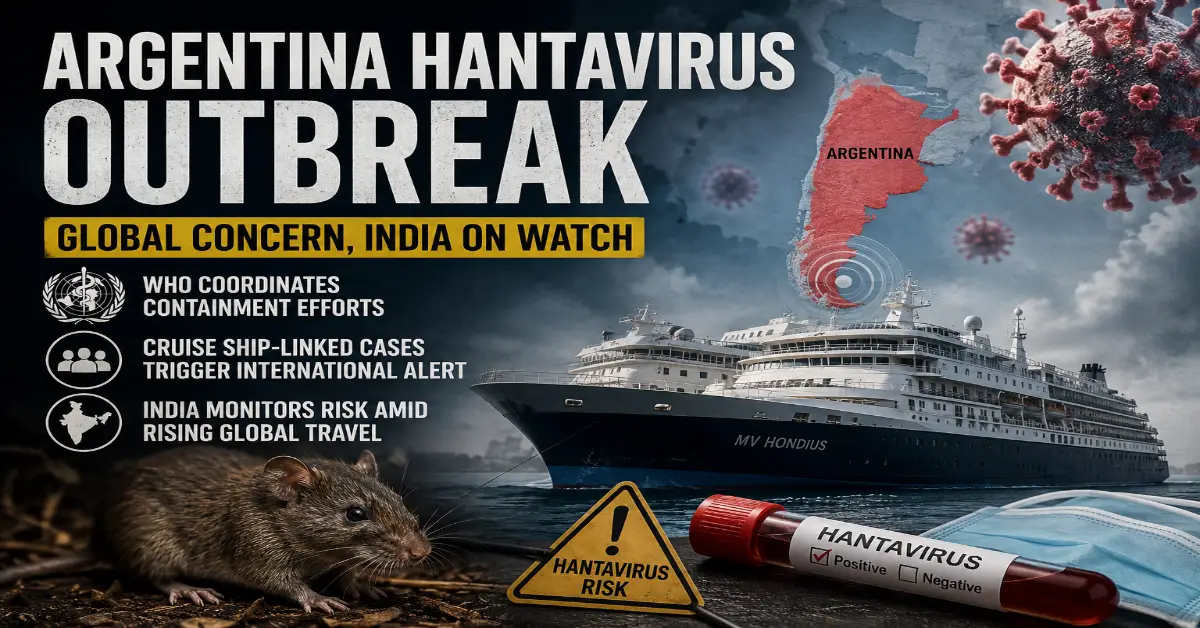
A rare outbreak of the deadly Andes strain of hantavirus linked to Argentina has triggered international concern after multiple infections and deaths were reported. Health authorities across Europe, the Americas, and Australia are now monitoring passengers and tracing possible exposures. The World Health Organization is working with health officials from different countries to help control the spread of the virus.
According to reports, the cruise ship departed from Ushuaia, Argentina, in April 2026 before several passengers developed severe respiratory symptoms associated with hantavirus pulmonary syndrome (HPS). At least three deaths have been reported so far, while additional suspected and confirmed cases are under medical observation in multiple countries.
What is Hantavirus?
Hantavirus is a rodent-borne virus that can cause severe respiratory illness known as Hantavirus Pulmonary Syndrome (HPS). Humans typically become infected through contact with infected rodent urine, saliva, or droppings. Symptoms often begin with fever, fatigue, and muscle pain before progressing to breathing difficulties.
The Andes strain found in parts of Argentina and Chile is particularly concerning because it has shown limited human-to-human transmission in past outbreaks.
WHO’s Response
The WHO, has described the outbreak as serious but stated that the current risk of a global pandemic remains low. The agency is working with health authorities from Argentina, Spain, the Netherlands, South Africa, and other affected countries to develop updated precautionary and quarantine guidelines.
The organization has reportedly recommended up to 42 days of monitoring and quarantine for exposed passengers because the Andes strain can, in rare cases, spread from person to person, unlike most hantaviruses, which are primarily transmitted through rodent exposure.
International media outlet CNN in its article has highlighted growing concerns over the unusual nature of the outbreak, particularly because it occurred aboard a cruise ship involving travelers from several countries. CNN reports focused on how health agencies are treating the outbreak cautiously due to the Andes virus strain’s rare human-to-human transmission capability and the challenges of international passenger tracking.
CNN coverage also emphasized that experts currently do not believe the outbreak poses a COVID-like global threat, though they warned that climate change, changing rodent habitats, and increased international travel may contribute to future zoonotic outbreaks.
Should India Be Worried?
India has not reported any confirmed link to the current Argentina outbreak, and public health experts say the immediate risk to India remains low. However, the outbreak carries important lessons for Indian health authorities.
Possible Concerns for India
- Increased international travel could raise the risk of imported infections.
- Climate change and urbanization may increase rodent-human interactions.
- India’s crowded cities and tourism hubs could face challenges if rare zoonotic infections enter the country.
- Surveillance systems at airports and ports may need strengthening for unusual viral illnesses.
Why Experts Say Panic is Unnecessary
- Hantavirus does not spread as easily as COVID-19.
- Human-to-human transmission remains rare and limited mainly to the Andes strain.
- India already has experience managing infectious disease surveillance after the COVID-19 pandemic.
- Standard hygiene, sanitation, and rodent-control measures significantly reduce infection risk.
Indian public health experts are likely to closely monitor WHO advisories, especially concerning international travelers arriving from affected regions in South America and Europe.
Global Health Warning on Emerging Zoonotic Diseases
The Argentina-linked outbreak has once again highlighted the growing threat of zoonotic diseases, illnesses that spread from animals to humans. Experts warn that environmental changes, deforestation, and global travel are increasing the likelihood of such outbreaks emerging worldwide.