

MSME Schemes 2026: Entrepreneurs face challenges like funding, quality certification, exports, delayed payments, and registration. Discover how CGTMSE, PMEGP, ZED, LEAN, Samadhaan, and other MSME schemes can help take your business to the next level.
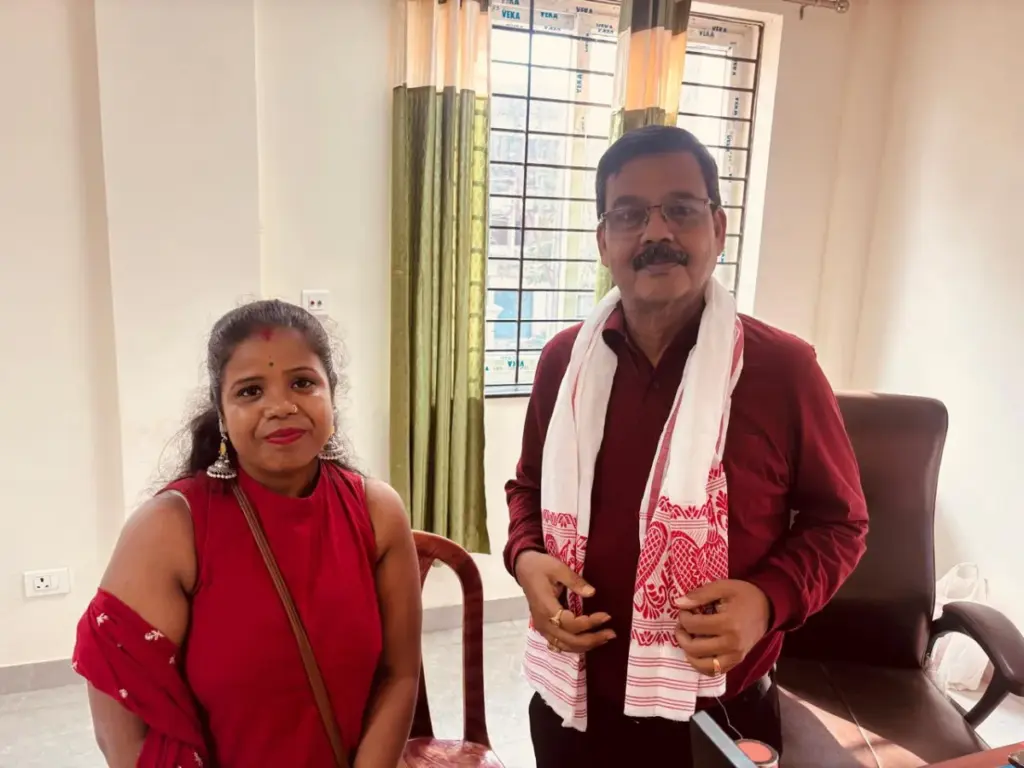
I recently had the opportunity to meet Mr. T.K. Banerjee, MSME DFO, Siliguri – and it turned out to be one of the most valuable and inspiring meetings of my entrepreneurial journey. I had carried along the Eco-Sustainability Kit from my venture Dream of Soul – a kit I am developing as a new Green Gifting Model, blending Indian culture with sustainability.
I shared my entire business model with him and presented one kit. He examined every product carefully and gave me candid feedback. Most importantly, he walked me through various MSME schemes and portals that are truly a boon for entrepreneurs like us.
Based on this experience, I am sharing the common problems Indian entrepreneurs face and the MSME solutions that can address each one.
How MSMEs Are Classified
The government has divided enterprises into three categories based on investment and annual turnover:
Micro: Investment up to ₹1 crore and turnover up to ₹5 crore. Small: Investment up to ₹10 crore and turnover up to ₹50 crore. Medium: Investment up to ₹50 crore and turnover up to ₹250 crore.
This classification unlocks access to loans, subsidies, and various government schemes.
What to do: Start by completing your Udyam Registration. If you don’t have all your documents ready, you can still get formally registered through the Udyam Assist Platform (UAP).
Start Right: Get Formally Registered
How MSMEs Are Classified
The government has divided enterprises into three categories based on investment and annual turnover:
Micro: Investment up to ₹1 crore and turnover up to ₹5 crore. Small: Investment up to ₹10 crore and turnover up to ₹50 crore. Medium: Investment up to ₹50 crore and turnover up to ₹250 crore.
This classification unlocks access to loans, subsidies, and various government schemes.
What to do: Start by completing your Udyam Registration. If you don’t have all your documents ready, you can still get formally registered through the Udyam Assist Platform (UAP).
Common Challenges and MSME Solutions
1. No Collateral for Loans
Problem: Over 70% of MSMEs in India struggle to get credit from banks because they lack collateral. This is the single biggest barrier to financial growth.
Solution – CGTMSE (Credit Guarantee Fund Trust for Micro and Small Enterprises): Under revised guidelines effective 1 April 2025, guarantee coverage is as follows — 90% for Micro/Women/Agniveer-promoted MSEs; 80% for NER, J&K, and Ladakh; and 75% for other categories.
How to apply: Request CGTMSE cover when applying for a loan from a bank or NBFC.
2. Need Capital to Start a New Unit
Problem: Startups and greenfield MSMEs often face an equity gap. Without seed funding, taking the first step feels impossible.
Solution – PMEGP (Prime Minister’s Employment Generation Programme):
Subsidy (Margin Money) rates are as follows. In urban areas – 15% for general category and 25% for women/SC/ST/NER beneficiaries. In rural areas – 25% for general category and 35% for women/SC/ST/NER. Maximum project cost is ₹50 lakh for manufacturing and ₹20 lakh for service units.
How to apply: Online portal application + Detailed Project Report (DPR) + EDP training.
3. Delayed Payments from Large Buyers
Problem: According to a FICCI report (2024), 40% of MSMEs receive payments more than 60 days late. This creates a severe cash flow crisis.
Solutions:
MSME Samadhaan — File a payment default case with the MSEFC and get resolution within 45 days. Portal: samadhaan.msme.gov.in
MSME-ODR — Resolve disputes digitally through an online dispute resolution platform.
4. Getting Access to Government Procurement
Problem: Government tendering processes feel lengthy and expensive, making it difficult for small MSMEs to participate.
Solution — Public Procurement Policy (2012): 25% of government purchases are mandatorily reserved for MSMEs, with sub-targets of 3% for women entrepreneurs and 4% for SC/ST. Tender documents are provided free of cost and EMD (Earnest Money Deposit) is waived.
Portal: sambandh.msme.gov.in
5. Cost of Quality Certification
Problem: International trade and B2B contracts require NABL/ISO test reports. For MSMEs, the cost of obtaining these is often prohibitive.
Solutions:
ZED Certification (Zero Defect Zero Effect) — Women-owned MSMEs receive 100% subsidy.
Technology Upgradation & Quality Certification — 75% assistance on testing and audit costs (subject to ceiling limits).
Portal: zed.msme.gov.in
6. High Production Costs and Wastage
Problem: 60% of MSMEs still operate using traditional methods, resulting in high wastage and low productivity.
Solution — LEAN Scheme (valid till 31 March 2026): Training at Basic, Intermediate, and Advanced levels, plus subsidies for adopting Industry 4.0 tools.
Portal: lean.msme.gov.in
7. Design, Innovation, and Intellectual Property
Problem: IPR costs are a significant burden for MSMEs. Obtaining GI tags, trademarks, and patents can run into several lakhs of rupees.
Solution — MSME Innovative Scheme: Foreign patents — reimbursement up to ₹5 lakh; domestic patents — ₹1 lakh; GI tag — ₹2 lakh; trademark — ₹10,000.
Portal: innovative.msme.gov.in
8. Expensive Machinery and Testing Labs
Problem: Setting up a dedicated lab or high-end machinery is not feasible for every MSME.
Solution — MSE-CDP (Cluster Development Programme): Common Facility Centres (CFCs) are set up to provide shared infrastructure and equipment to all MSMEs in a cluster.
Portal: dcmsme.gov.in
9. Entering Export Markets for the First Time
Problem: EPC registration, testing, insurance, and quality certification costs are a heavy financial burden for first-time exporters.
Solution – International Cooperation (IC) Scheme: Reimbursement of EPC-RCMC fees, export insurance premiums, and testing/certification expenses.
Portal: ic.msme.gov.in
10. Need for Certified Test Reports
Problem: Foreign buyers and government tenders require NABL-grade test reports.
Solution — MSME Testing Centres & Stations: Located in Delhi, Mumbai, Kolkata, Chennai, and 18 other cities. Services include mechanical, electrical, metallurgical, and chemical testing.
11. Not Knowing Which Government Office to Approach
Problem: Entrepreneurs often don’t know where to go or who can help them.
Solution – DC (MSME) Network: With 30+ MSME DFOs, 20+ testing centres, and 10 Technology Centres, this network provides consultancy, skill development, and export promotion support.
12. B2B Visibility and Finding Buyers
Problem: MSMEs struggle to find buyers and often have little to no online presence.
Solution — NSIC Global Mart: A government-backed B2B portal offering leads, events, and networking opportunities.
Portal: nsic.co.in
13. Grievances and Guidance
Problem: Entrepreneurs have to run between multiple departments for different issues.
Solution — CHAMPIONS Portal: A single platform for grievance redressal, guidance, and scheme linkage.
Portal: champions.gov.in
14. Unlocking Cash from Invoices Quickly
Problem: Payments are stuck for 90–120 days, blocking working capital.
Solution – TReDS (Trade Receivables Discounting System): An RBI-regulated platform where MSMEs can discount their invoices to immediately improve cash flow.
15. Special Incentives for Women Entrepreneurs
Problem: Women entrepreneurs often receive less recognition, fewer networks, and lower preference in procurement.
Solutions: 100% subsidy under ZED Certification for women-owned MSMEs, plus a 3% quota under the Public Procurement Policy.
16. Finding All Information in One Place
Problem: MSMEs are often confused about which scheme is available on which portal.
Solution – MY MSME Portal: A single-window access platform for Udyam, Samadhaan, LEAN, ZED, Innovative schemes, and more.
My 10-Step Action Checklist
- Visit your nearest MSME-DFO or Testing Station for personalised guidance.
- Complete your Udyam / UAP Registration.
- Add CGTMSE cover when applying for a bank loan.
- Apply on PMEGP for new units or business expansion.
- Start your quality journey with ZED Bronze certification.
- Get your processes evaluated under the LEAN Scheme.
- Claim reimbursements for IPR and design costs.
- Use Samadhaan / ODR when payments are delayed.
- Leverage GeM and Sambandh for government procurement opportunities.
Reimburse EPC, testing, and insurance costs through the IC Scheme for exports.
(Author Ranjita Mandal is an emerging entrepreneur from South India.)