

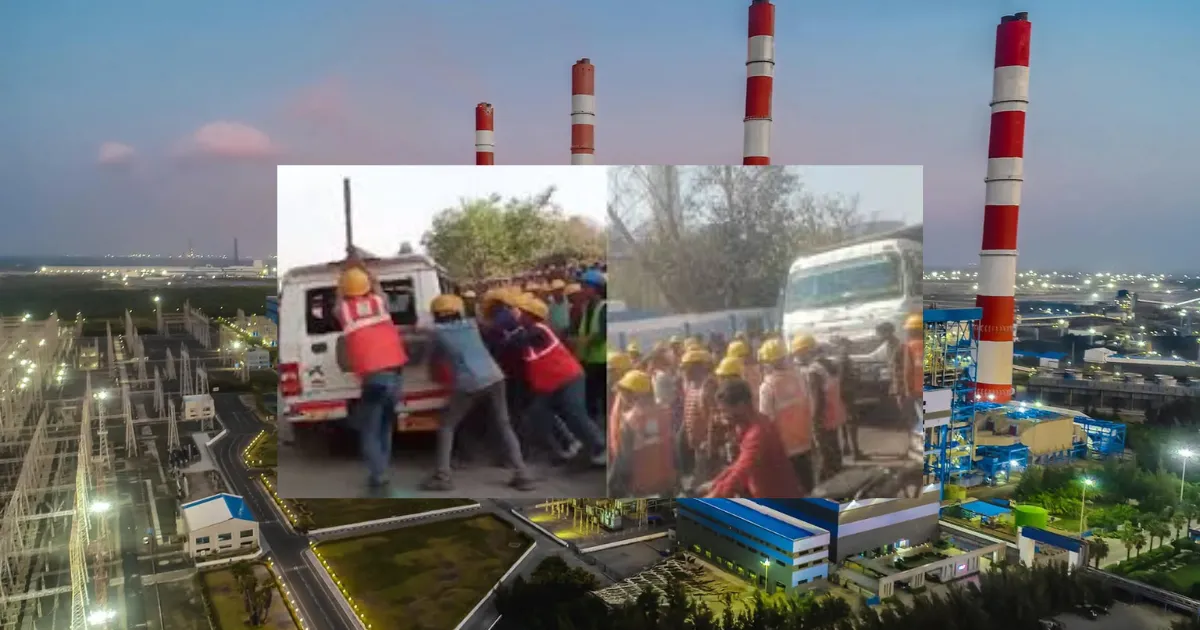
Singrauli Power Plant Incident: The sudden death of a contract worker at an Adani power plant in Madhya Pradesh has triggered widespread protest and unrest among labourers and raised broader concerns about workplace safety, accountability, and the treatment of migrant workers in India’s industrial sector. The incident occurred at the power facility in Badhaura village of Singrauli district, a place of multiple thermal power plants and mining projects.
While authorities have claimed the death as a natural cause of death, the violent reaction from fellow workers indicates deeper tensions within the workforce; highlighting issues that may extend beyond a single incident.
Video Source: LokmatHindi
The Incident: A Worker Dies on Duty
According to preliminary reports, the deceased worker has been identified as Lallan Singh, a migrant labourer from Garhwa district in Jharkhand. Singh reportedly died late on Friday night after his health suddenly deteriorated while working at the power plant facility.
Officials later stated that early indications suggest a possible heart attack, and the body was sent to the Baidhan Trauma Centre for post-mortem examination. The district administration has said that the exact cause of death will only be confirmed after the autopsy report is completed.
 Follow TJP Whatsapp Channel
However, the lack of immediate clarity about the circumstances surrounding his death appears to be the cause of anger among workers on site.
Worker Outrage Escalates into Violence
Within hours of the incident, tensions at the plant escalated dramatically. On Saturday, a group of workers started protesting and demanded accountability and explanations from the management.
The protest quickly turned violent. Workers reportedly damaged several vehicles inside the plant premises, including vehicles belonging to the police, and set fire to parts of the facility. Some staff members were also allegedly manhandled during the chaos.
Police and district administration officials rushed to the site to restore order. Authorities later said the situation was brought under control, but the incident exposed tensions among the facility’s workers.
Questions Over Working Conditions
Although officials initially described the death as a medical emergency, labour groups and workers present at the site have raised questions regarding working conditions, medical preparedness, and response time at the plant.
Singrauli’s industrial belt relies heavily on migrant labourers employed through contractors. Many such workers often operate under demanding conditions involving long shifts, exposure to dust and heat, and limited access to immediate medical support.
Labour activists argue that sudden deaths at industrial sites frequently trigger disputes because workers suspect delayed medical assistance or inadequate workplace safety protocols.
Migrant Labour Vulnerability in Industrial Projects
The case has once again highlighted the vulnerability of migrant workers in large industrial projects across India. Workers from states like Jharkhand, Bihar, and Uttar Pradesh commonly travel to energy hubs such as Singrauli for employment opportunities.
However, their employment is often mediated through third-party contractors, which can complicate questions of accountability when accidents or deaths occur. Investigators typically must determine whether the worker was directly employed by the company or by a contractor operating within the facility.
This distinction often determines compensation, legal responsibility, and the scope of labour law protections.
Administration Promises Investigation
Local authorities have assured that the entire incident, including the circumstances of the worker’s death and the violence that followed, will be thoroughly investigated. Officials say they are working with plant management and police to collect evidence and restore normal operations.
For now, the post-mortem report will play a crucial role in determining whether Singh’s death was purely medical or if other factors contributed.
A Broader Industry Concern
Industrial accidents and sudden worker deaths continue to challenge India’s energy and infrastructure sectors. Even when incidents are attributed to natural causes, lack of transparency or communication can quickly escalate tensions among workers.
The Singrauli incident once again highlighted a recurring dilemma: balancing rapid industrial development with worker safety, transparency, and humane labour practices. Until those issues are addressed systematically, incidents like this are likely to continue triggering unrest at large industrial sites.
The incident in Singrauli should serve as a wake-up call for both industrialists and the government to prioritize strict safety measures and healthier working conditions for labourers before more tragedies occur. Since this is not the first incident of its kind, establishing clear accountability and stronger oversight has now become more crucial than ever.