

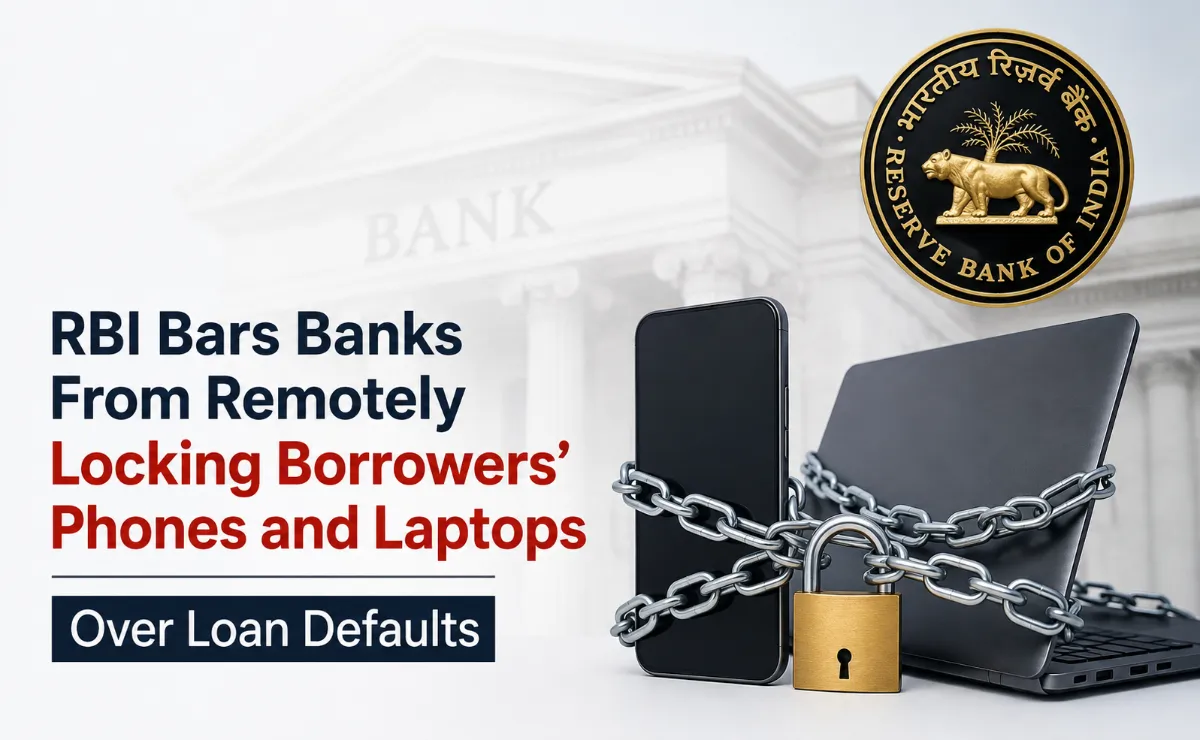
The Reserve Bank of India has clamped down on an increasingly common but controversial loan recovery tactic: remotely disabling a defaulting borrower’s mobile phone, tablet or laptop. Under a new regulatory framework, banks and other regulated lenders will no longer be allowed to use this method to pressure borrowers into repaying, unless the loan itself was taken out specifically to purchase that device.
The rules, part of RBI’s updated guidelines on the “Conduct of Regulated Entities in Recovery of Loans and Engagement of Recovery Agents,” take effect from January 1, 2027.
What changes
Until now, some lenders, particularly those financing budget smartphones, had begun using remote device-locking software to freeze a borrower’s phone the moment an EMI was missed, cutting off calls, apps and basic functionality until the dues were cleared. Consumer advocates and privacy experts had criticised the practice as disproportionate, arguing it handed lenders excessive control over a borrower’s personal life.
Under the new rules, lenders cannot use any technology-based mechanism to restrict or disable a borrower’s device to recover dues on personal, home, vehicle or other loans unrelated to the device itself. The only exception is when the loan in question was used to buy the device, for instance, a phone bought on EMI.
Even device-financing loans come with safeguards
Even in cases where locking is permitted, RBI has built in strict conditions. Lenders must adopt a graduated approach rather than shutting a device down outright. Restrictions can only kick in after a loan has been in default for 30 days, and any locking measures must be phased in over 60 days. Banks cannot impose a full block the moment a payment is missed.
Certain functions must stay accessible no matter what, including incoming calls, SMS, emergency SOS services, and government or public-safety alerts. Lenders and any third-party firms providing this locking technology must also get certification from the device’s original manufacturer or operating system platform before deploying it.
Broader crackdown on recovery conduct
The device-locking rules are just one part of a wider tightening of recovery practices. RBI has also barred recovery agents from using abusive, threatening or intimidating language, and prohibited anonymous calls, repeated harassment, public humiliation, or threats aimed at a borrower’s family, assets or reputation.
On data handling, the central bank has directed lenders to ensure that any borrower or guarantor information passed on to staff or recovery agencies is limited strictly to what is necessary for the recovery process, in an effort to curb misuse of personal data.
Background
The move follows months of deliberation. RBI Governor Sanjay Malhotra had indicated as far back as October 2025 that the central bank was still weighing the pros and cons of phone-locking as a recovery mechanism. The debate intensified as smartphone financing grew and reports emerged of borrowers losing access to their only communication device over relatively small missed payments