
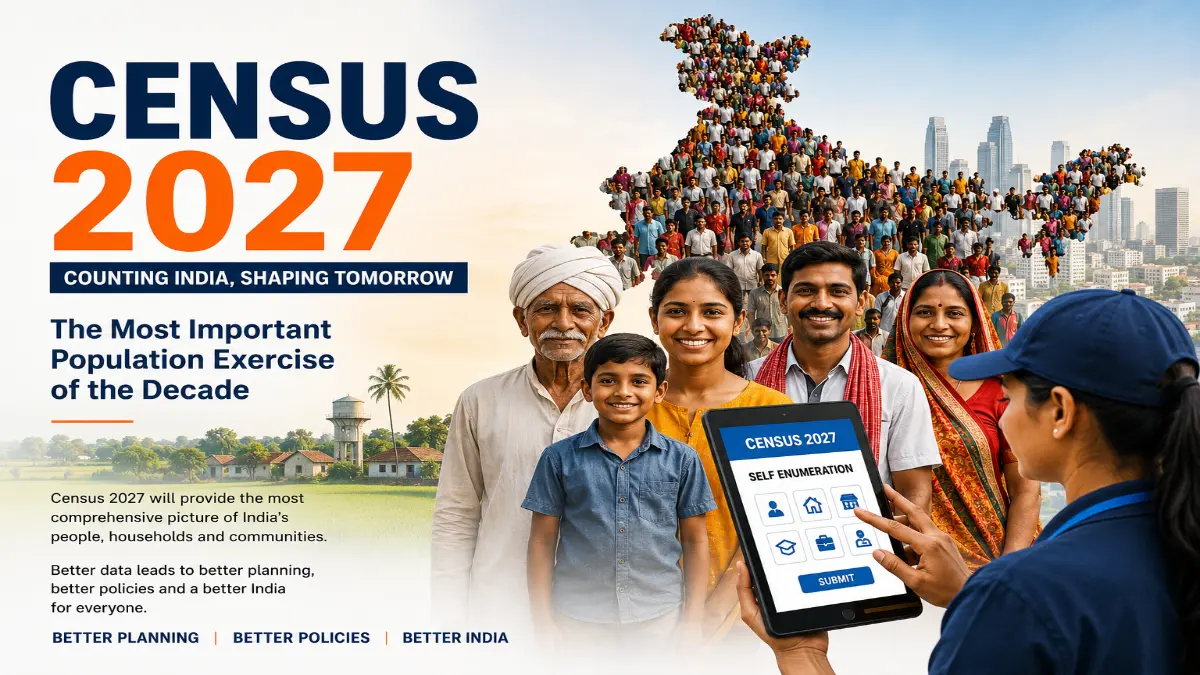
India is preparing for one of the most important administrative exercises in its history — the Census 2027. After a delay of several years due to the COVID-19 pandemic and logistical reasons, the Government of India has officially started preparations for the country’s next national census. This will be India’s first census in 16 years, as the previous census was conducted in 2011.
More importantly, Census 2027 is expected to become a historic milestone because it will introduce several major changes, including digital data collection, self-enumeration, and a possible nationwide caste enumeration.
Here are the Top 10 points every Indian must know about Census 2027.
1. Census 2027 Will Be India’s First Census Since 2011
India normally conducts a census every 10 years. The 2021 Census was postponed mainly because of the COVID-19 pandemic. As a result, the country will now conduct the next census in 2026-27, creating a gap of nearly 16 years between two population counts.
This makes Census 2027 extremely significant because India’s population, migration patterns, urban growth, and social structure have changed dramatically since 2011.
2. It Will Be India’s First Fully Digital Census
For the first time in Indian history, census officials will use mobile applications, tablets, and digital systems instead of depending completely on paper forms.
Officials say the move will:
- Reduce paperwork
- Improve accuracy
- Speed up data processing
- Allow real-time monitoring
India will join a small group of countries using large-scale digital census technology.
3. Citizens Can Fill Their Census Data Online
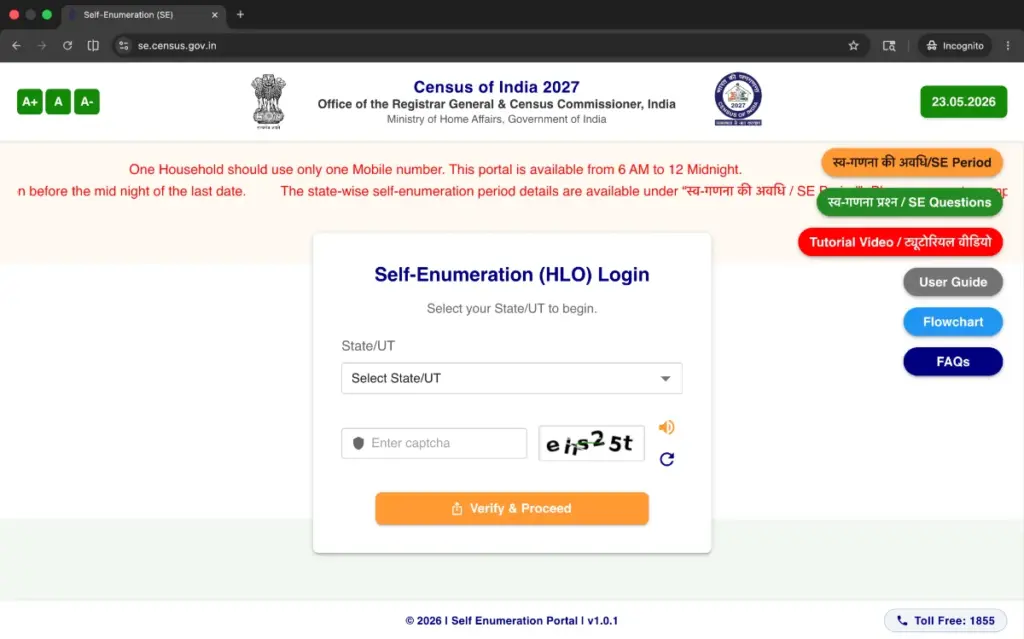
Another major feature is Self-Enumeration.
People will be able to submit their details online through an official government portal instead of waiting only for enumerators to visit homes.
According to recent reports, more than 1.44 crore households have already completed digital self-enumeration in early phases of the process.
This system is expected to make the census faster and more citizen-friendly.
4. Census 2027 May Include Caste Enumeration After Nearly 100 Years
One of the biggest political and social developments linked to Census 2027 is the inclusion of caste data.
If implemented fully, this would become:
- The first comprehensive caste count after Independence
- The first nationwide caste enumeration since the 1931 Census during British India
Since 1951, India has collected caste data only for Scheduled Castes (SCs) and Scheduled Tribes (STs), not for all communities.
The move is expected to have a huge impact on:
- Reservation policies
- Welfare schemes
- Political representation
- Social justice debates
5. Census 2027 Will Happen in Two Phases
The government plans to conduct the census in two separate stages.
Phase 1: House Listing & Housing Census
This phase records:
- Housing conditions
- Household assets
- Water and sanitation facilities
- Electricity access
- Internet and communication facilities
Phase 2: Population Enumeration
This phase records:
- Population details
- Age
- Education
- Occupation
- Migration
- Religion
- Language
- Caste (if finalized)
6. Different States Will Have Different Census Dates
Because of weather conditions in Himalayan and snow-bound regions, the census schedule will vary across India.
Early Census Areas (October 2026)
- Ladakh
- Jammu & Kashmir
- Himachal Pradesh
- Uttarakhand
Rest of India
Population enumeration is expected around March 1, 2027.
7. Census Data Will Influence Delimitation and Women’s Reservation
Census 2027 is politically crucial because the data may become the basis for the next delimitation exercise — the process of redrawing parliamentary and assembly constituencies.
The census may also affect:
- Distribution of Lok Sabha seats
- State-wise political representation
- Implementation of women’s reservation policies
This means Census 2027 could reshape India’s electoral map for decades.
8. More Than 30 Lakh Officials May Participate
India’s census is considered one of the largest administrative exercises in the world.
Reports indicate that:
- Around 33 lakh government personnel may be involved
- Teachers, local government staff, and other officials will serve as enumerators and supervisors
Several states have already started training and deployment preparations.
9. Census 2027 Will Help Decide Future Government Policies
The census is not just about counting people. It directly affects:
- Welfare schemes
- Education planning
- Healthcare allocation
- Urban infrastructure
- Employment policies
- Rural development
- Budget distribution
Government ministries rely heavily on census data to understand how India is changing demographically and economically.
10. Census 2027 Could Become India’s Most Important Data Exercise of the Decade
India is now the world’s most populous country, and policymakers believe Census 2027 will provide the most detailed picture of modern India.
The exercise is expected to reveal:
- Population growth trends
- Urbanization patterns
- Migration shifts
- Digital access
- Education levels
- Employment realities
- Social inequalities
Because of its scale and political importance, many experts believe Census 2027 could become one of the most consequential national exercises in independent India.
Why Census 2027 Matters
Census data affects nearly every major government decision. From building roads and schools to determining parliamentary representation and reservation policies, the census shapes India’s future.
For ordinary citizens, Census 2027 will likely determine:
- How resources are distributed
- Which regions receive more development funding
- Future social justice policies
- Electoral representation
In many ways, Census 2027 is not just a population count — it is a snapshot of India’s transformation in the 21st century.
Key Timeline at a Glance
| Topic | Details |
|---|---|
| Last Census | 2011 |
| Next Census | 2026-27 |
| Type | India’s first digital census |
| Self Enumeration | Yes |
| Caste Enumeration | Expected |
| First Phase | Housing & house listing |
| Second Phase | Population count |
| Main Enumeration Date | March 1, 2027 |
| Himalayan States Start | October 2026 |
| Expected Final Reports | 2028 |
FAQs
What kind of information will the census collect?
The census may collect information related to:
Name
Age
Gender
Education
Occupation
Religion
Language
Migration
Housing conditions
Internet access
Water and sanitation
Caste details (if approved)
Is participating in the census mandatory?
Yes. Under Indian law, citizens are expected to provide accurate information to census officials.
Will census data remain confidential?
The census is conducted by the Office of the Registrar General and Census Commissioner under the Ministry of Home Affairs, Government of India.
Will Census 2027 affect elections and parliamentary seats?
Yes. Census data may become the basis for future delimitation, which can change Lok Sabha and Assembly constituency boundaries and seat distribution.
How is Census 2027 different from previous censuses?
Major new features include:
Digital data collection
Online self-enumeration
Real-time monitoring
Possible nationwide caste enumeration
What is Census 2027
Census 2027 is India’s upcoming nationwide population counting exercise conducted by the Government of India. It will collect detailed information about the country’s population, households, education, occupation, migration, housing, and social structure.
What is the official website for self Enumeration.
Official website for self Enumeration is https://se.census.gov.in/
Sources:
- Press Information Bureau (PIB)
- Census India Official Website
- Registrar General & Census Commissioner of India