
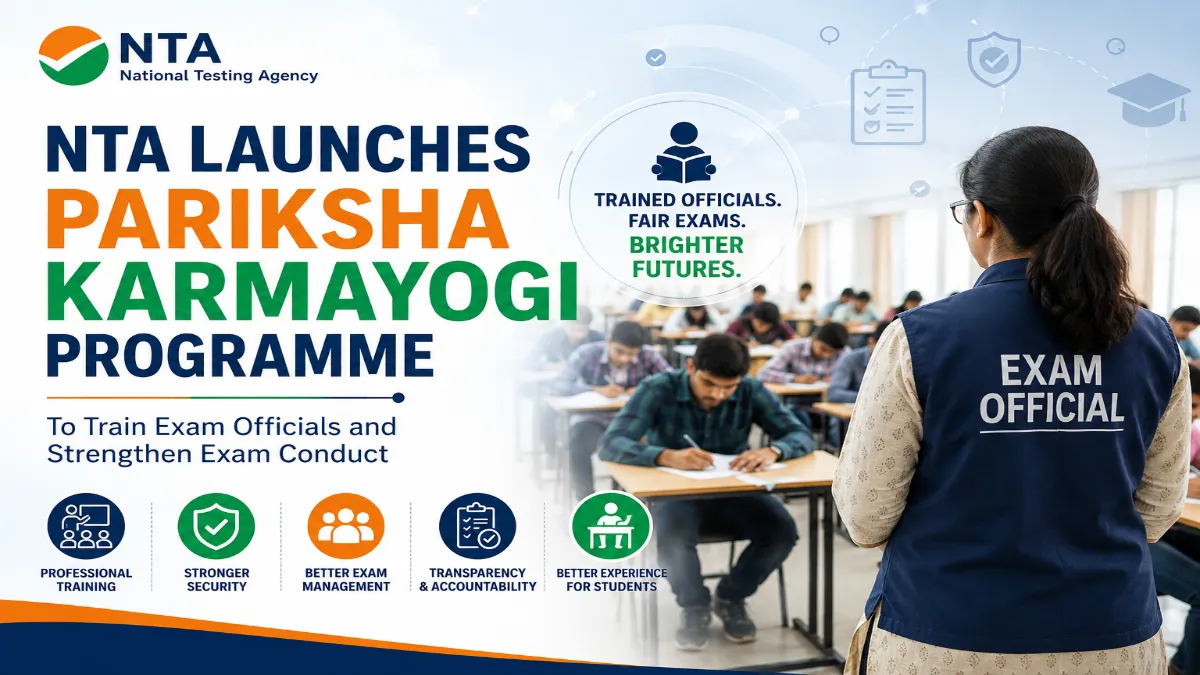
The National Testing Agency (NTA) has introduced a new initiative called “Pariksha Karmayogi Programme”, aimed at professionally training the officials involved in conducting examinations across the country. While students may not be sitting in these training sessions, the programme could significantly improve their exam experience in the years ahead.
What Is the Pariksha Karmayogi Programme?
The Pariksha Karmayogi Programme is a capacity-building initiative designed to train the people responsible for planning, managing, and conducting major examinations. These include officials working at examination centres, coordinators, administrators, invigilators, and other personnel involved in the exam process.
The objective is simple: to ensure that examinations are conducted smoothly, fairly, securely, and with greater accountability.
Why This Programme?
Over the past few years, competitive examinations have become increasingly complex. With millions of candidates appearing for exams such as NEET, CUET, JEE, and others, even small operational errors can create stress and confusion for students.
The programme aims to address challenges such as:
- Improving coordination among examination staff.
- Strengthening security measures during examinations.
- Ensuring standard operating procedures are followed uniformly.
- Enhancing the ability of officials to handle emergencies and unexpected situations.
- Promoting ethical and transparent examination practices.
By investing in the training of exam officials, NTA hopes to minimise mistakes and build public confidence in the examination system.
How Will Students Benefit?
At first glance, a training programme for officials may not sound exciting for students. However, its impact could be significant.
1. Better Exam-Day Management
Students often face issues such as delayed entry, confusion over instructions, technical glitches, or poor coordination at exam centres. Properly trained staff can handle these situations more efficiently.
2. Greater Transparency
Uniform training means officials across different centres follow the same procedures. This reduces inconsistencies and helps ensure a level playing field for all candidates.
3. Stronger Security
Enhanced awareness about examination protocols can help prevent malpractice, unfair practices, and procedural lapses.
4. Reduced Stress
A well-organised exam environment allows students to focus on what truly matters, their performance, rather than worrying about administrative confusion.
What Will Officials Learn?
The training modules are expected to focus on various aspects of examination management, including:
- Examination ethics and integrity.
- Standard operating procedures.
- Candidate handling and communication.
- Emergency response mechanisms.
- Technology-based examination processes.
- Data confidentiality and security.
- Problem-solving during unexpected situations.
These skills are intended to make officials more prepared and professional in their responsibilities.
Why This Move Matters
India’s entrance examinations determine admission opportunities for millions of students every year. Trust in these examinations is crucial.
The Pariksha Karmayogi Programme signals a shift from simply conducting exams to building a culture of professionalism and accountability in examination administration. Instead of reacting to problems after they occur, the focus is increasingly on preventing them through preparation and training.
What Should Students Take Away?
Students do not need to register for this programme or take any action. However, they should view this initiative as a positive step toward improving the examination ecosystem.
No training programme can eliminate every challenge overnight, but creating a better-prepared workforce behind the scenes can contribute to a smoother and more student-friendly examination experience.
Final Thoughts
For students preparing for highly competitive exams, fairness and consistency are just as important as hard work. The launch of the Pariksha Karmayogi Programme reflects an effort to strengthen the systems that support these examinations.
While the spotlight usually falls on question papers and results, this initiative reminds us that the people managing exams also need the right training. If implemented effectively, it could help create examinations that are not only efficient but also more reliable and trustworthy for every aspirant across the country.